
The Fairfield County Curb Appeal Guide: Matching Hardscapes to Historic Architecture
Last update: January 05, 2026
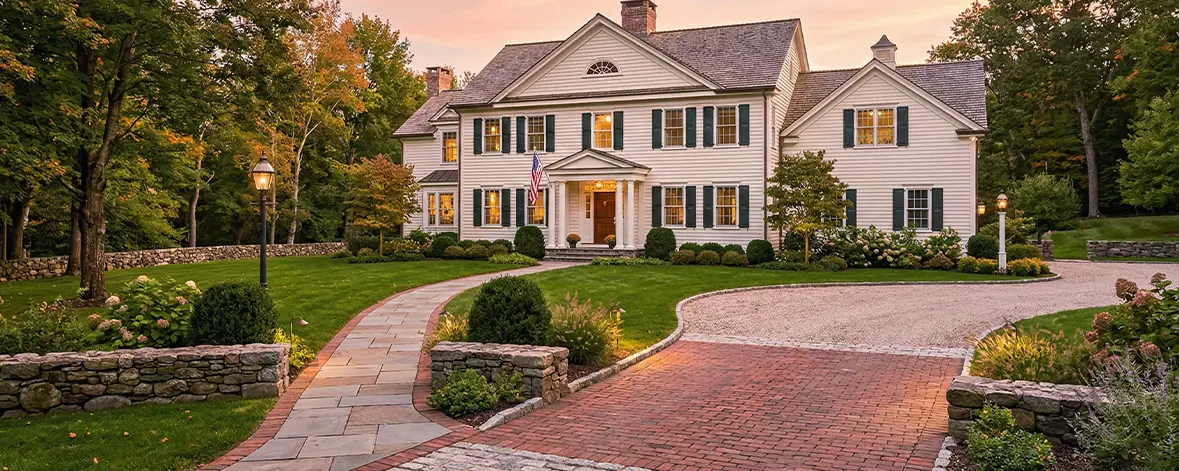
Don't Put a "Strip Mall" Driveway on a Historic Estate.
In Fairfield County, “Neighborhood Character” is not a buzzword, but it is the money of real estate. A glittering, jet-black asphalt driveway whirling to a 1790 Antique Colonial is shocking, just like neon sneakers and a tuxedo. The landscape must respect the home’s era. When browsing driveway ideas in Fairfield County, homeowners often overlook that the wrong material can flatten the dimensionality of a property, making a bespoke home feel generic.
Whether you are restoring a Pre-war gem or listing a luxury estate, view the driveway not as a utility, but as a frame. The right choice elevates the architecture, while a mismatched surface can subtly lower perceived value. It is about creating a cohesive visual narrative that starts the moment the tires leave the public road.
Preserving the Rustic Charm: The Case for Oil & Stone
For the owners of Antique Colonials in Silvermine or farmhouses in Greenfield Hill, standard blacktop is often too sterile and visually heavy. It clashes with the soft patina of centuries-old fieldstone walls. The “Curator’s Choice” here is undoubtedly the oil and stone driveway in CT residents have favored for generations.
This material marries the romantic, crunching texture of a gravel country lane with the stability required for New England winters. It’s Matt, organic finish complements the imperfections of 200-year-old clapboard siding rather than fighting them. However, execution is key. Avoid modern concrete curbs, which sever the visual flow; instead, utilize steel edging or natural cobblestones to maintain that “undisturbed” aesthetic. This approach aligns beautifully with historic district driveway rules.
Clean Lines for the Coast: Modern Pavers & Geometrics
In the coastal enclaves of Compo Beach and Shippan Point, the architecture shifts to glass, steel, and crisp geometry. Here, loose gravel feels messy, and traditional asphalt feels uninspired. The solution lies in Large-Format Permeable Pavers. These materials bring the pure, straight lines of granite or bluestone, which excellently reflect the cool grey color of the Long Island Sound.
This is not only a matter of aesthetics, but it is a functional requirement. Many coastal properties face strict coverage limits. Permeable options can be used to absorb water and reduce the flooding problems that are prevalent in such areas. The aim is a monolithic appearance, which is deliberate and architectural to base the home without the distraction of water views. It is high-tech minimalism at its best.
Old World Elegance: The Power of Belgian Block
When dealing with the expansive scale of a Georgian Colonial in Back Country Greenwich or a Tudor in New Canaan, a long, unadorned driveway risks looking like a commercial runway. It lacks the necessary visual weight to balance the manor house. The remedy is the strategic use of masonry, specifically a Belgian block driveway apron and liners.
We recommend running a “Liner”—three rows of cobblestone bordering the entire length of the driveway. This acts as a visual corset, tightening the appearance of the asphalt and adding a historic texture that leads the eye toward the home. To give the final impression of entry, extend the apron into a complete cobblestone plaza in the entrance to the garage. This creates a parking lot that looks like a beautiful courtyard, which indicates a house with an extensive history and a long-term existence.
Buying in a Historic District? Read This Before You Pave.
| Historic District | Town | Preferred Material | Restricted Material | Notes |
|---|---|---|---|---|
| Southport Village | Fairfield | Oil & Stone | Bright White Concrete | An HDC review is usually required for any footprint change. |
| Silvermine | Norwalk / New Canaan | Oil & Stone / Gravel | Blacktop (Discouraged) | Focus on preserving the "rural lane" aesthetic. |
| Ridgebury | Ridgefield | Gravel / Chip Seal | Concrete | Stone walls are protected; do not remove for widening. |
| Cannondale | Wilton | Native Gravel | Asphalt | Often requires "scenic road" hearings for apron changes. |
Which Material Fits Your Architecture?
Choosing a driveway material isn’t merely about personal preference; it is about architectural partnership. Your home’s siding and hardscape should converse, not shout. A mismatch creates immediate visual friction—like wearing brown shoes with a black suit. This is a simple decision matrix that we use to make the driveway a supporting character to the primary textures of the home.
If you are struggling to visualize the final result, use this checklist to guide your selection:
- If you have Weathered Cedar Shingles: Choose Oil & Stone. The pea gravel texture mimics the organic, beach-worn feel of the wood.
- If you have Red Brick: Opt for Grey Granite Pavers or Belgian Block. You need cool grey tones to provide the necessary contrast. Never pair red brick pavers with a red brick house; it washes out the facade.
- If you have White Clapboard (Colonial): Choose Dark Grey Cobblestone or Asphalt with Gravel Top-Dressing. The high contrast sharpens the white lines of the home.
- If you have Stucco (Modern/Mediterranean): Go for Large Format Geometric Pavers. Keep it smooth and sleek to match the monolithic siding.
Your driveway should provide strength to your home. The right materials can protect your property value, improve its curb appeal, and stay in accordance with local zoning and historic rules.
Before you go for paving, make sure your hardscape aligns with the layout and architecture of your home.
For that, don’t go blind. Instead, count on G & L Paving and Masonry to design it right from the start. From the consultation to the final results, we follow local zoning rules while improving the aesthetic appeal of your property.
Enhance Your Home’s Character.
“Don’t let a generic driveway lower your property value. Contact G&L Paving and Masonry, LLC for a design consultation that respects your home’s history.”