
The Fairfield County’s "Freeze-Thaw" Survival Guide
Frost Heave: The upward movement of the ground caused by the formation of ice lenses within the soil as it freezes. This natural force exerts massive pressure that can shift foundations, crack driveways, and lift outdoor structures like decks or fences.
Why Driveways Fail in Fairfield County
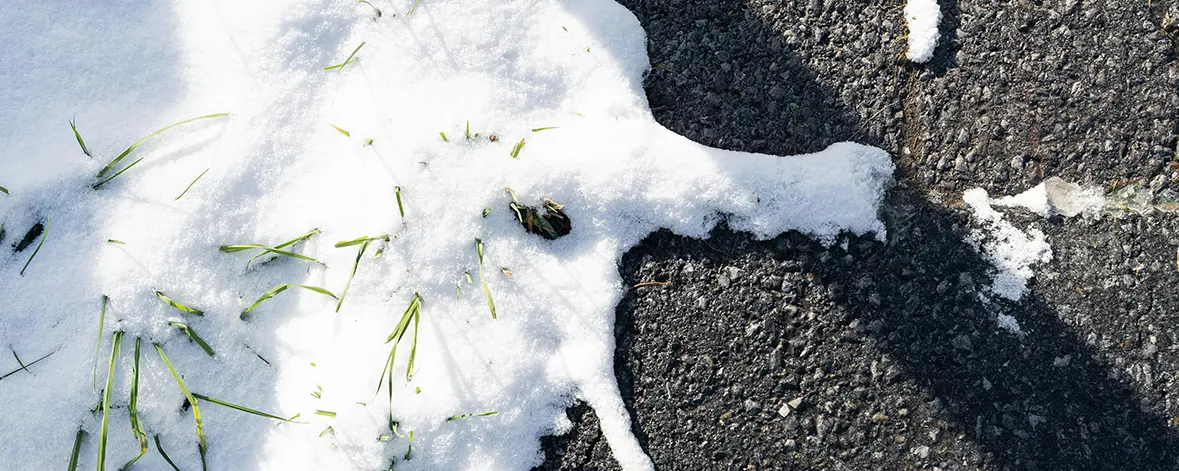
Every winter in Fairfield County, an invisible excavator goes to work beneath your driveway. Water that is held in the soil is frozen and expands, then applies an upward force to the soil of about 9 percent, creating the conditions behind most driveway frost heaves in CT. This pressure is enough to move asphalt and concrete like a hydraulic jack. It is not freezing in the first place, but Connecticut’s relentless freeze-thaw cycle. We cross the 32°F line dozens of times throughout the winter, and pavement has to rise and fall and move and move. This constant motion fractures surfaces, weakens the base below, and turns small cracks into complete structural failures and making premature driveway repair in Fairfield County almost inevitable.
The "Heave Map": Why Location Matters
The Two Climate Zones of Fairfield County: Coastal vs. Inland
| Zone | Towns | Primary Threat | Why It Fails |
|---|---|---|---|
| The "Frost Belt" | Ridgefield, North Stamford, Wilton, Easton, Newtown | Deep Frost Heaves | Higher elevation + "Ledge Rock" traps water near the surface. Frost lines go deeper (42"+), causing massive lifting. |
| The "Tidal Zone" | Westport, Fairfield Beach, Rowayton, Shippan Point | Salt Corrosion & Erosion | Tidal flooding saturates the base. Salt air corrodes concrete. High water tables prevent drainage. |
| The "Clay Belt" | Trumbull, Stratford, parts of Norwalk | Subgrade Shifting | Clay soils hold water like a sponge. When they freeze, they expand significantly more than sandy soil. |
The "Salt vs. Stone" Debate (The De-Icer Guide)
Stop Poisoning Your Pavement: The Safe List for De-Icing
| De-Icer Product | Chemical Name | Effect on Asphalt | Effect on Concrete/Pavers | Verdict |
|---|---|---|---|---|
| Rock Salt | Sodium Chloride | Low Damage | High Damage (Causes spalling/pitting) |
❌ Avoid on Pavers/Concrete aprons. |
| Calcium Chloride | CaCl2 | Safe | Safe (Works to -25°F) |
✅ Best Choice for all surfaces. |
| Magnesium Chloride | MgCl2 | Safe | Moderate (Can leave residue) |
✅ Good Alternative (Pet friendly). |
| Kitty Litter / Sand | (Abrasives) | Neutral | Neutral | ⚠️ Traction Only (Does not melt ice). |
Pro Tip: “Never use rock salt on a driveway less than 12 months old. The curing process makes fresh asphalt and concrete highly susceptible to chemical damage.”
Coastal Resilience: Surviving the "King Tides"
When the Ocean Meets the Driveway: Solutions for Flood Zones
If you are living on the shore, or in Compo Beach, or Fairfield Beach Road, or Shippan Point, you are driving against another foe, hydrostatic pressure. In the periods of storm surge or king tides, the water that is on the surface floods and entraps itself beneath the ordinary concrete or asphalt. As the tide drains off, the water trapped in that way squeezes up and out, breaking off slabs beneath. It is not a superficial matter, but rather physics.
The most effective long-term solution in a permeable pavers flood zone is a surface designed to release pressure. Permeable pavers are the most stable option in flood areas, as the water is not accumulated under the layer, but instead flows through the open pavers.
The Repair vs. Replace Flowchart
Do You Need a Patch or a Bulldozer?
If your driveway looks like it has a spider-web or reptile-scale pattern (often called alligator cracking), that’s your answer: the sub-base has failed. No surface patch can fix a foundation problem. Those cracks mean the base below is saturated, unstable, and moving. Any patch applied here will mirror the same pattern within weeks.
Replacement is the only long-term fix.
If the driveway lifts in winter and settles back down in summer, you’re seeing frost heave, not simple wear. That points to a drainage failure, not bad asphalt. In this case, patching is money wasted. Proper repair means addressing water first, often with drainage improvements, before replacement. Only clean, narrow cracks (under ¼ inch) that stay flat year-round are true candidates for sealing or patching.
The "Invisible" Solution: Drainage Engineering
The Pipe That Saves Your Pavement
Most driveway failures begin with water you never see. Trapped moisture beneath the surface is what drives frost heaves, cracking, and base collapse. That’s why drainage engineering, not surface material alone, determines longevity. Even the best driveway salt in CT can’t protect pavement if water is allowed to sit below and freeze repeatedly. Without proper drainage, the freeze-thaw cycle always wins. The solution is engineered drainage. On sloped properties and hillside towns, curtain drains intercept groundwater before it reaches the driveway. On flatter lots, French drains collect and pipe water safely away from the base. It isn’t upselling; it’s waterproofing your investment so the pavement can actually last.
Winter-Proof Your Investment.
Don’t let the next freeze cycle destroy your curb appeal. Contact G&L Paving and Masonry, LLC for a drainage assessment and winter-resilient paving consultation.