
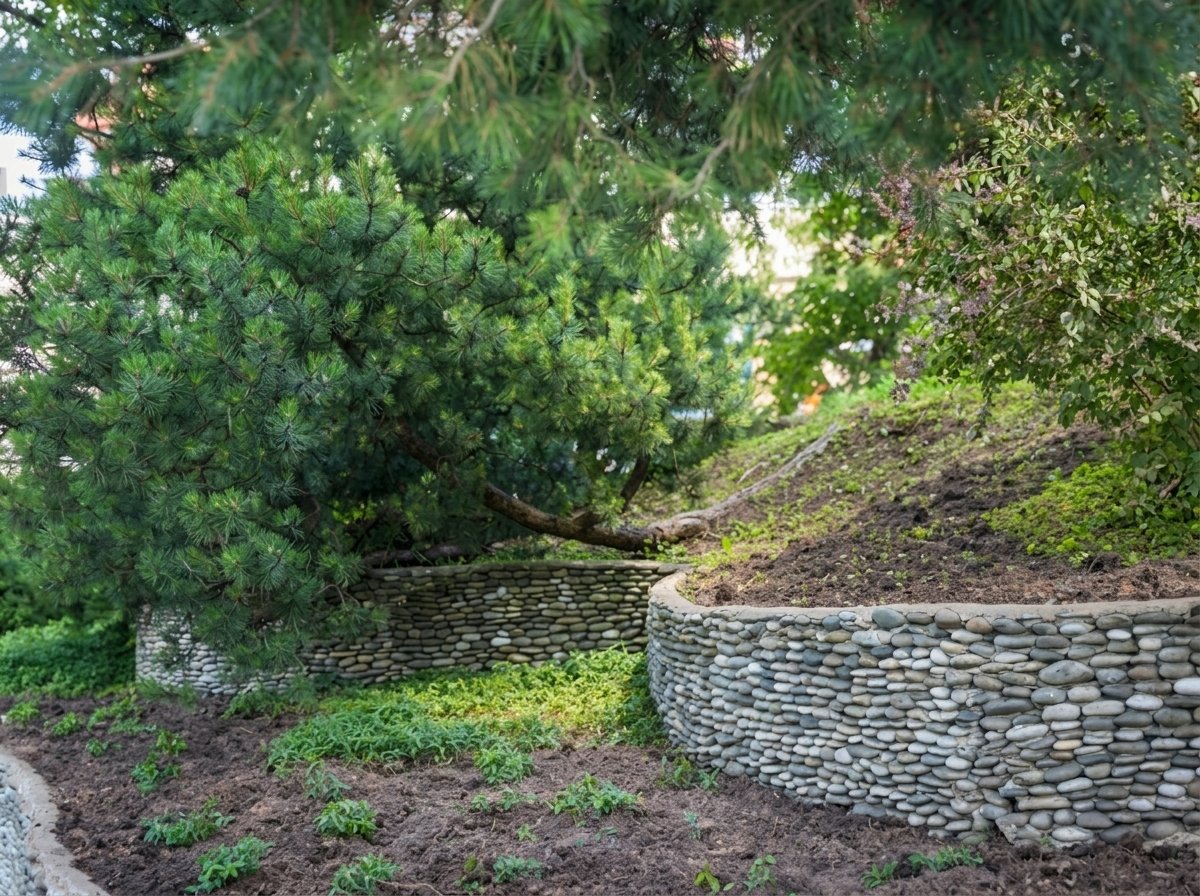
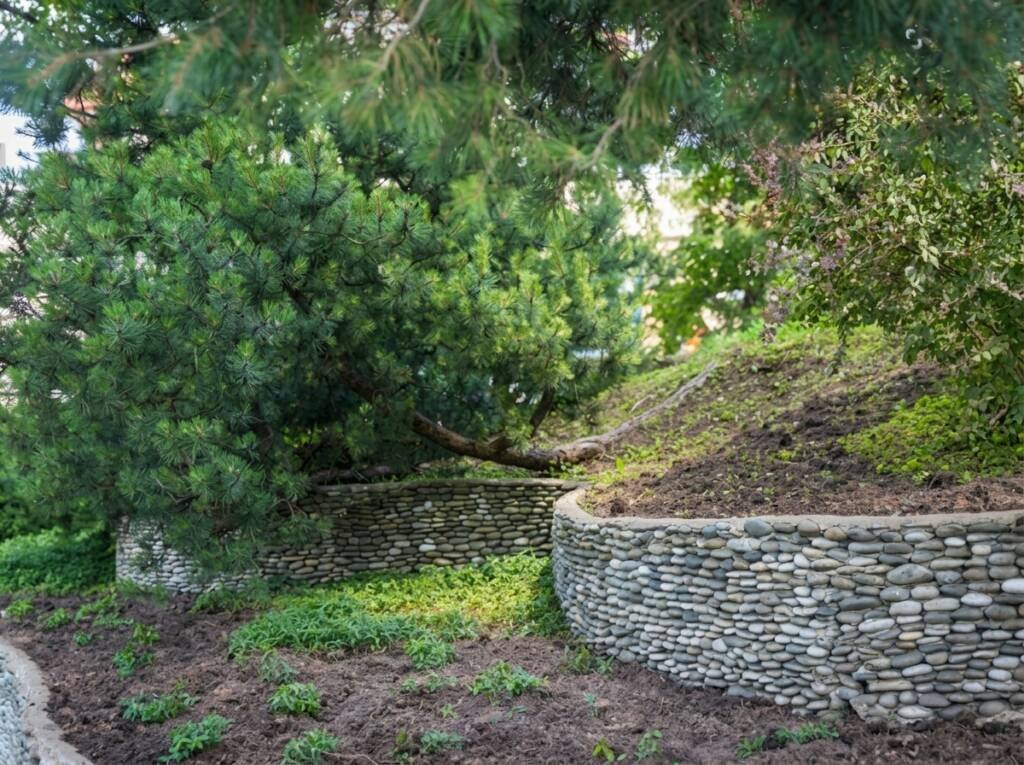
Do you want to have usable green space in your backyard? You have to solve the problem of steep backyard slopes. Steep slopes are a big issue for most homeowners in North Stamford, Wilton, and Weston.
Homeowners love the views and the surrounding land. It has beautiful rolling hills and rocky ground, but steep slopes in the backyard take up a lot of space. A backyard is not only meant for a patio and a swing set. The steep slope makes it difficult to mow the lawn. It is exhausting to do this every week.
The problem of unusable land increases with a steep slope. Families want space for kids, plants, seating, and activities. They get a muddy slope after the rain. These problems increase because the lawn grass doesn’t grow. Erosion is also a threatening problem to nearby walkways and patios.
Instead of having to relocate, you can build a good and strong retaining wall. It opposes the downward force of soil and reshapes the backyard of your property. G&L Paving and Masonry can build retaining walls to fix the steep slopes and make the yard usable again.
Let’s learn more about retaining walls and their benefits.
The Engineering: Taming the Hillside
How Terracing Works
Terracing converts the steep slopes into horizontal steps. This process is called cut and fill. We remove soil from the upper section of the hillside. The team installs a retaining wall to hold the soil in position. This offers support for the soil.
We can backfill and compact the soil once the wall is made. This creates an even surface above or below the wall. Homeowners appreciate this new area, as you can make a patio or garden space here. We can create and install several terraces in a large space. This decreases soil pressure.
At G&L Paving and Masonry, we analyze soil type and drainage systems. Our team measures the slope angle. This advanced preparation makes it easier to design and build walls. The walls will stay strong and stable for decades.
Fighting Gravity & Hydrostatic Pressure
Soil settles into the ground. Wet soil is heavier than dry soil. Wilton and Weston face heavy rains. In this situation, water collects behind retaining walls. This increases the pressure, and it is called hydrostatic pressure.
A wall collapses if the water behind it is unable to move. Homeowners often notice bulging and cracked walls. Walls fall down completely in extreme situations. These failures happen with DIY walls or negligent contractor work.
Most retaining walls in Stamford are more than three or four feet tall. The wall must be safe. This is possible if the contractors handle the drainage and reinforcement system properly.
We construct walls that can bear the weight of soil and water. We prioritize your long-lasting safety.
Material Choices: Blending into the Woodlands
Connecticut Fieldstone (The Natural Look)
Connecticut fieldstone is ideal for Weston and North Stamford properties due to their wooded surroundings and classic homes. The stones are available in natural gray and brown. We collect stone directly from the job site and use it as an eco-friendly option for your stonework.
The landscape and the stone walls can age together. This is a timeless selection for gardens and historic homes.
Dry-stack stone walls are made with two methods. The stones are placed without visible mortar. In this technique, stones can move slightly. This gives a natural look. Some walls are made with mortar for added strength and height control. This gives the wall a little more rigidity. We build stone walls with dry-stack and mortar methods. Our experienced team can handle the work with utmost attention to detail.
Segmental Retaining Walls (The Engineered Choice)
Segmental retaining walls are the best choice for tight spaces and modern designs. We use interlocking concrete blocks from premium companies like Unilock and Techo-Bloc. This guarantees the reliability of the materials.
We use fiberglass pins or built-in lips to connect the blocks. The wall will not shift even with intense pressure. These walls can tackle large and heavy loads.
These segmental walls are installed faster and cost less than natural stone. They offer consistent color and clean edges. These walls are commonly selected for pools and driveways. G & L Paving and Masonry has an experienced team to install these systems. We guarantee that the walls stay strong for years.
Beyond Utility: Creating “Outdoor Rooms”
A retaining wall is not just built to hold the soil. It should look beautiful as well. It should create spaces that people want to use.
You can grow flowers or vegetables in a garden terrace. People use the raised beds like a small garden. It can also help protect plants from deer because they are common in Weston and Wilton.
A seat wall can increase the value and comfort of your area. We cap retaining walls with smooth bluestone. This provides built-in seating for parties and fire pits. You can arrange a beautiful evening setup in this area.
You can also install a pool in Stamford backyards with a slope. We create level deck areas that support pools and patios. This means you don’t have to keep the hills unused. It can become a high-value outdoor living space. We design walls that will look good in the yard and make the space useful.
Pro Tip: Drainage is the Secret Sauce
A wall without drainage will fail every single time. Wilton and Weston’s soil has heavy clay and dense hardpan. This type of soil traps water and quickly increases pressure. The G&L Paving and Masonry team can build full drainage systems behind every retaining wall.
We use filter fabric to prevent soil from clogging the drain. Our team installs a layer of clean and crushed stone behind the wall. This means water can move easily.
We install a perforated pipe (French drain) in the foundation. It pushes water away to a dry well. This is an important step that protects the wall from heavy rain. A good drainage system is important for the safety of your wall.
FAQs About Retaining Walls for Hilly Terrain
1. Do I require a permit for a retaining wall?
Yes. Local authorities must issue a permit for walls. It only applies if your walls are more than three or four feet tall. G&L Paving and Masonry can help you get this permit and complete the project without any delay.
2. Can I use wood ties for a retaining wall?
This is not a good idea. Timber ties cannot hold the heavy Connecticut soil. They can often develop rot and warp. They eventually fail in this environment.
3. How do you handle the existing rocks on my property?
We attempt to reuse as much of the stone as possible from your lawn. This can save you money, and it maintains the natural appearance of the stone in your yard.
Stop Mowing a Cliff
Ready to turn that steep hill into a beautiful patio or flat lawn? Let’s evaluate your grade and design a structural wall that adds usable square footage to your home.