
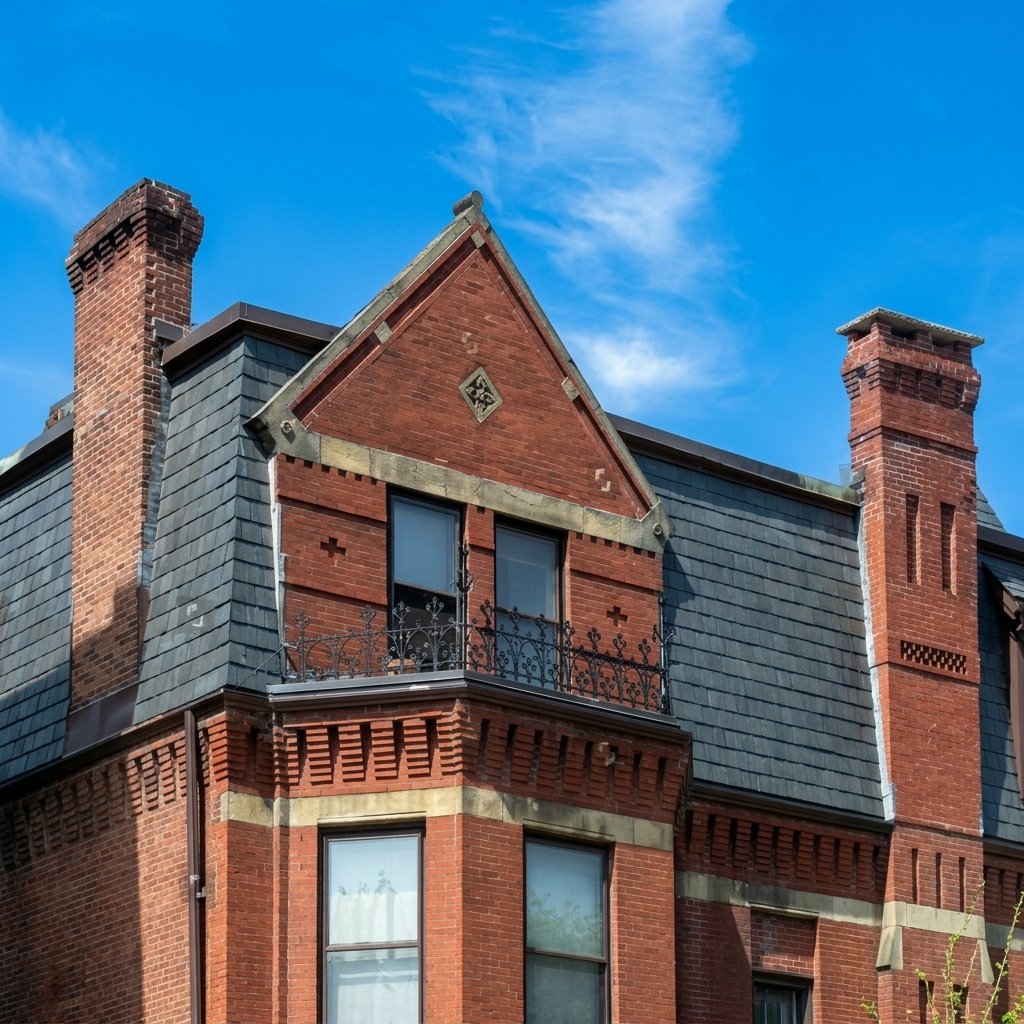
Chimneys in the conventional towns, such as Southport and Wilton, are decades old. They have worked for over 10 years, but now they have reached their maximum capacity. Don’t neglect the old chimneys as they keep your home safe.
Did you notice white powder forming on your bricks? You might find bits of red clay sitting on the ground below. People often notice gaps opening up between the stones and dismiss them. These are not just small stains. They are clear signs that your chimney is failing.
Restoring an antique chimney takes a very specific skill set that most contractors simply do not have. You cannot treat an antique chimney like a modern patio. In this guide, you will learn why modern cement ruins old bricks. You will see how our restoration methods save your home for the next century. People often think all masonry is the same, but old homes need a gentle touch. Let’s learn more about it.
The Science of “Spalling”: Why Old Bricks Pop
The Freeze-Thaw Cycle
Old bricks act like sponges as they have tiny holes that soak up water. When winter hits Fairfield County, that water turns to ice. Ice expands by 9%, and this expansion pushes against the brick from the inside.
The “Spall” Effect
The pressure becomes too much for the brick to handle. The face of the brick pops off. People call this “spalling.” Once the hard outer shell falls away, the soft middle is exposed to rain, accelerating damage.
The Local Factor
Our weather in Connecticut is tough on masonry. You deal with humidity from the coast and freezing winters. This mix creates a perfect storm. It causes chimneys in Darien and Wilton to fall apart faster than in other places.
The Mortar Mistake: Cement vs. Lime
The Danger of Portland Cement
Here is something most people never think about. The latest version of Portland cement is extremely hard. This is why people often use it to make driveways and foundations. It works well in that scenario. However, this is not suitable for old chimneys.
Bricks that were built before the 1940s are naturally soft. Builders used softer materials that could expand and contract based on temperature fluctuations. These bricks settled properly throughout the process.
When you press hard on Portland cement around a soft brick, you trap it completely. The mortar will stay strong and intact, so the pressure is directed to the bricks. The bricks will eventually crack.
Many experienced contractors often make this mistake. They want to do a good job and grab the strongest material available. But stronger is not always better when you are working with historic masonry.
The Solution: Lime-Based Mortar
We use authentic Lime Putty for your restoration. These mortars are softer than your bricks. They let moisture evaporate through the joints. We call this “Sacrificial Mortar.” The mortar wears out over decades, so your bricks stay perfect. You save the bricks by letting the mortar do the hard work.
Water from Above: The Crown and Cap
The “Wash” Failure
Most builder-grade chimneys come with a thin mortar wash smeared across the top. It looks fine when it is new, but within 5 to 10 years, it cracks. Sometimes sooner. That cracked wash is now an open invitation for water to enter your chimney.
The Internal Leak
Once water gets past a cracked crown, it travels down inside the chimney walls. It rots your damper and rusts out your firebox. It freezes the masonry from the inside out, speeding up spalling on bricks that are nowhere near the top.
In Darien, we see this pattern constantly. People come to us with perfect bricks at the bottom and destroy bricks near the top, all because water was entering from a failed crown years ago.
G&L’s Pro Tip: The “Drip Edge” Crown Saver
The single best investment you can make for your chimney in Darien is a proper Overhanging Crown with a Drip Edge.
Instead of smearing mortar across the top of your chimney, we form and pour a concrete crown (or install a solid slab of Bluestone) that extends two full inches past the brick on all sides. A groove, called a drip kerf, is cut underneath the overhang.
When rain hits the top of your chimney, it runs off the edge. It drips down onto the roof slope below and completely bypasses the brick. Gravity works to keep the masonry dry.
The freeze-thaw cycle will not get a chance to start. People who put money into a proper drip-edge crown consistently see their masonry hold up far longer than homes without one.
FAQs About Revitalization of Historic Chimneys
1. Can you match the mortar color on my 1850s farmhouse?
Yes. We mix custom batches of lime mortar to match the sand and color of your original home. People will not even see where the old mortar ends and the new starts.
2. Do I need to rebuild the whole chimney or just repoint it?
If your bricks are still holding strong, we simply remove the old mortar and pack in new. This process is called repointing, and it is far less invasive than a full rebuild.
3. What is “Lead Flashing” and why do I need it?
Lead flashing is the fitted metal wrap that sits right where your chimney meets the roofline. It creates a waterproof seal. We use lead because it is soft and lasts much longer than cheap aluminum.